
THE RIVER WHITEWATER
The River Whitewater is the only Chalk Stream that flows through Hart and it is one of only 200 or so in the entire World. The Whitewater is one of the headwater rivers feeding into the River Loddon catchment in North Hampshire.
The Government has been slow to recognise the significance of this national asset. Implementive legislation has been slow in coming, even after a comprehensive report, referred to as a “Recovery Pack” and prepared by national experts, was published. Action to progress the Recovery Pack was shelved following the change of government in July 2024.
Why is conservation of the River Whitewater so important and how is it in jeopardy?
There are several areas of concern that, taken together, make common cause for VOW and the Whitewater Conservation Society:
Surface Water Run-off and Pollution: The development would cover roughly 80 acres of agricultural land with concrete, leading to increased run-off. This run-off is expected to carry hydrocarbons, oils, and other toxins from the estimated 12,000+ vehicle movements (including many heavy goods vehicles) into the river system. The developer, Obsidian Strategic, has stated they intend to use Sustainable Drainage Systems (SuDS) to ensure run-off rates do not exceed pre-development levels and that water is treated before reaching the river. However, VOW maintains that these measures are insufficient for a habitat as sensitive and rare as the Whitewater.
Flooding Risks: Much of the Lodge Farm site is located within a floodplain (Flood Zones 2 and 3) or is highly susceptible to groundwater flooding. Opponents argue that replacing absorbent farmland with non-porous surfaces will exacerbate local flooding and force more water into the river. The use of the site for a large-scale employment use would be clearly contrary to national policy (in particular paragraphs 170-181 NPPF).
Sewage System Capacity: The local sewage network is reportedly already at or over capacity. Critics fear the additional demand from a massive logistics centre could lead to frequent sewage overspills directly into the River Whitewater.
Sedimentation and Habitat Damage: Chalk streams require clean, gravel-bottomed beds to support specialist wildlife like salmon and kingfishers. Excess sediment from construction and ongoing road use can "smother" these gravels, clogging the spaces where invertebrates live and fish lay eggs.
Fish and Invertebrates: As a chalk stream, the river provides essential spawning gravels for Brown Trout and supports Atlantic Salmon. There is also concern for the White-Clawed Crayfish, a native species under threat from habitat degradation and invasive American Signal Crayfish
Riverine Birds and Mammals: The valley is a habitat for Kingfishers, Water Voles and Otters, all of which require the high water quality and undisturbed banks that the development could compromise through sediment and chemical run-off.
THE WHITEWATER AND HART’S LOCAL PLAN 2044
The government’s decision to shelve the Chalk Stream Recovery Pack sparked widespread concern. Housing developments, driven by inflated targets, still pose a growing threat to these fragile waterways.
During the National Planning Policy Framework consultation period (July–September 2024), almost 700 people urged the Government to prioritise chalk stream protections in its planning reforms. The MP for NE Hampshire, Alex Brewer, has played a prominent part in urging the government to restore the place of the Recovery Pack in its legislative timetable – she sponsored an Early Day Motion in Apr 25 which was supported by over 40 MPs. While the Government has committed to protecting chalk streams through the local planning system, our MP is working with local councillors to ensure this commitment is embedded in local plans, with clear protections for the future. She has launched a petition on her website so local people can express their support and has also written directly to the Minister to call for special protection for chalk streams.
But while Councillors await action from Westminster, they are taking action to improve protections locally.
Close to home, and most importantly as far as the Whitewater is concerned, Hart District Council has expressed formal support for the Rights of Rivers movement. In response to public questioning in January 2026, Council Leader David Neighbour stated that the council's position on the matter is "yes". The council's approach to the Rights of Rivers includes:
Policy Integration: The council intends to develop supplementary planning advice for a new local plan to protect and enforce the rights of its rivers, specifically the Hart, Whitewater, and Blackwater.
Riparian Ownership: As a significant owner of riparian rights along these tributaries, the council believes it is in a strong position to help implement these protections.
Regional Collaboration: The council has been in discussions with the Hampshire & Isle of Wight Wildlife Trust and has consulted with neighbouring councils like Basingstoke and Deane.
Beyond Symbolic Declarations: Councillor Neighbour emphasised that while a declaration is a "piece of paper," the council expects to be judged by its actions in protecting and enhancing river corridors through its planning and development powers.
Basingstoke & Deane Borough Council formally adopted its 'Declaration on Rights of Rivers' on 10 March 2026 - a powerful contribution to the debate in Hampshire.
Inspired by the Universal Declaration of the Rights of Rivers, the charter sets out six fundamental rights for the Borough’s rivers and streams, including its rare chalk streams: the right to flow, to perform essential functions within their ecosystems, to be free from pollution, to connect with sustainable aquifers, to native biodiversity, and to regenerate and be restored. This declaration begins to put ambition into practice, with river rights now embedded in local decision-making.
On 2 Apr 2026 the leader of Basingstoke Council pointed out that “Our water supply cannot meet the Government's housing target! For the first time we have asked the right questions and the evidence we now have says there is not enough water supply to meet the uplift in housing the government are demanding. South East Water, the Environment Agency and Natural England all agree with us that this is a major issue. Infrastructure is over decade late, and will take a decade more to deliver. We also know we have a major problem with sewage and storm overflows in to the Loddon and Test, Thames Water and Southern Water are poisoning our precious chalk rivers”
Details about the Save our Chalk Streams campaign, led by Hampshire and Isle of Wight Wildlife Trust, can be found here. (VOW is a supporter of HIWWT’s campaign).
Help us
The developers are purely interested in making money and don’t care about the potential damage this development could do to our local countryside and the environment.
We are fighting hard to prevent this damaging development and there is a great deal you can do to help us. Please click the link below to find out more.
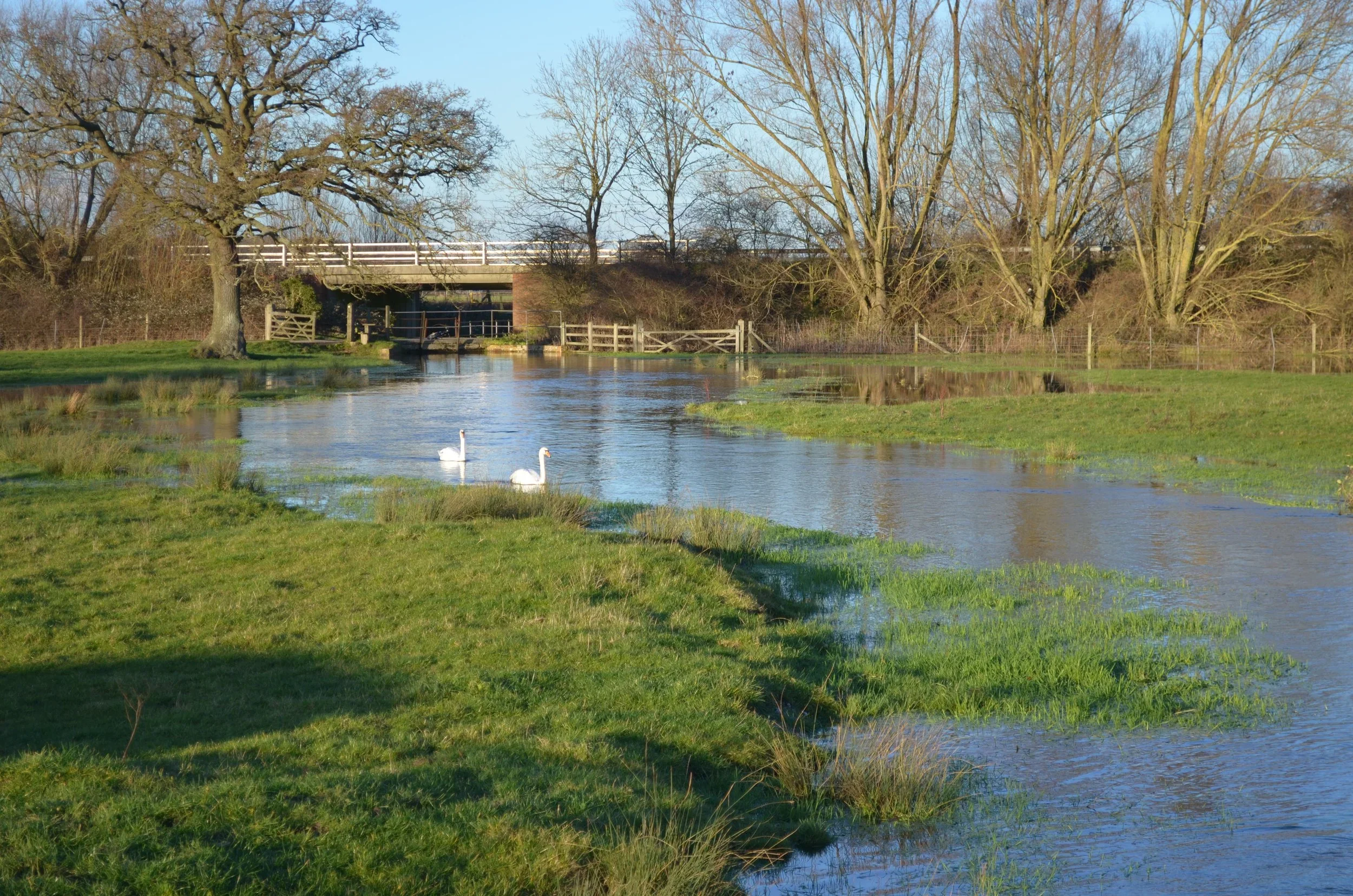
The River Whitewater is one of only 200 precious Chalk Streams left in the world and is directly threatened by this proposed development. Here showing how it regularly bursts its banks to flood nearby fields.
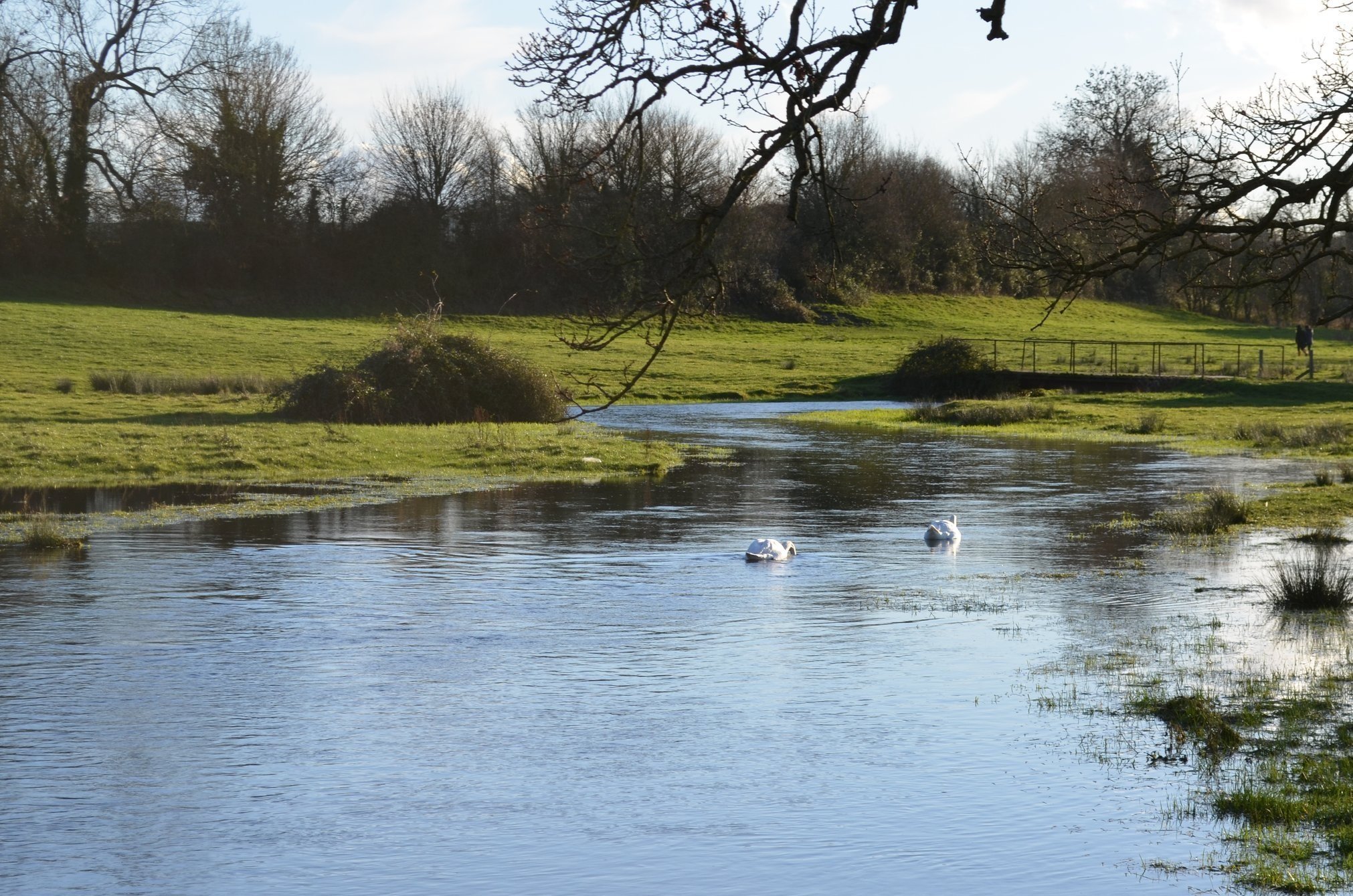
MILESTONES IN CHALK STREAM PROTECTION - EFFORTS TO SAVE THE WHITEWATER
In June 2026 Hart DC ran a consultation into the content and format of its new Local Plan (intended to supersede the existing Plan 2032). The new Plan will provide a long-term planning framework from 2026 to 2044, including a vision and strategic priorities for the District, setting out the overall amount and distribution of new development, site allocations and other policies for the determination of planning applications. A Policies Map will accompany the Plan and illustrate geographically where its policies apply. The invitation to contribute to this process was a timely opportunity for VOW to propose that the health of the river is not jeopardised by unsuitable developments in its catchment area, as follows:
Topic: Hart Local Plan 2044
Re: Scoping Consultation 27 May – 19 June 2026
Subject: Special Protections for the the River Whitewater
The River Whitewater is identified as a main water body and a Site of Importance to Nature Conservation (SINC), providing access to riverside flora and fauna that is beneficial to the well-being and recreation of the public. Natural England and the Environment Agency recognise a number of Sites of Special Scientific Interest (SSSI) along the length of the river that can currently be viewed in the correct context within their surroundings,
The Whitewater is not however just a SINC it is also a chalk stream. Chalk streams are rare and valuable habitats, often referred to as England’s rain forests or Great Barrier Reef, and only some 200 of them exist in the world today
VOW has therefore urged Hart District Council to ensure that the new Local Plan puts in place special protections against anything that could cause damage to or put at risk this rare and fragile environment. Protections that are supported by so many other individuals and organisations across the UK.
Which individuals and organisations?
A chalk stream strategy was published in 2021 by Catchment Based Approach’s (CaBA) Chalk Stream Restoration Group (CSRG), setting the future direction needed to protect and enhance England’s chalk streams. This group is made up of representatives from the Environment Agency, Natural England, Ofwat, Water UK, WWF, Angling Trust, Salmon and Trout Conservation, The Rivers Trust, Wild Trout Trust and Wildlife Trusts from across England.
In May 2025, Basingstoke & Deane Borough Council backed a “Rights of Rivers” motion. A commitment to treat rivers, including chalk streams, as living ecosystems that deserve a stronger voice in decisions – especially when it comes to planning and development, and how to tackle pollution and over-abstraction.
On Friday 30th May 2025 Sophia Holloway’s petition “please don’t abandon the chalk stream recovery pack” passed 10,000 signatures, requiring a formal response from the government.
On 27 October 2025 a motion put forward by the Bishop of Norwich in the House of Lords was voted on and passed. That motion required spatial development strategies to list chalk streams in the strategy area, set out measures to protect them from pollution, abstraction, encroachment and other damage, and assign responsibilities to strategic planning authorities for their protection and enhancement.
The Chalk Streams (UNESCO Natural World Heritage Site) Bill was introduced under the Ten Minute Rule by Pippa Heylings MP and was granted leave to be brought in on 25 February 2026 (motion approved without a vote). It is listed on the UK Parliament bills tracker and currently shows as having started in the Commons (first stage).
As a result of this ongoing and committed fight to protect chalk streams by experts, the clergy, politicians and voters alike it is essential that a policy is introduced into the new Hart Local Plan that specifically:
protects the River Whitewater from pollution, abstraction, encroachment and any other activity that will cause damage to this rare environment.
assigns responsibilities to Hart's planning department to ensure its protection.
In addition, VOW has also called on Hart's councillors to work with Basingstoke & Deane, as partners in the new Unitary Authority, to back a similar 'Rights of Rivers' motion for Hart's Rivers in general and the Whitewater chalk stream in particular. And include those rights as part of the Hart Local Plan 2044.
VOW