
The Heritage of Lodge Farm
This area of North Hampshire is an ancient and precious landscape with evidence of human habitation going back many thousands of years. The site at Lodge Farm is a prime example of this with remains indicating human activity dating back to the neolithic period around 10,000BC.
THE ROMAN VILLA
The site contains the remains of an large late Roman bath house and villa positioned close to the River Whitewater that was partially revealed during an amateur dig in 1929.
It is highly likely given the potential size of the villa, that the immediate area encompassing the planned development space will contain further important Roman remains that are yet to be discovered. The site needs to be preserved so that a modern archaeological dig can be organised in the future.
THE ROYAL LODGE
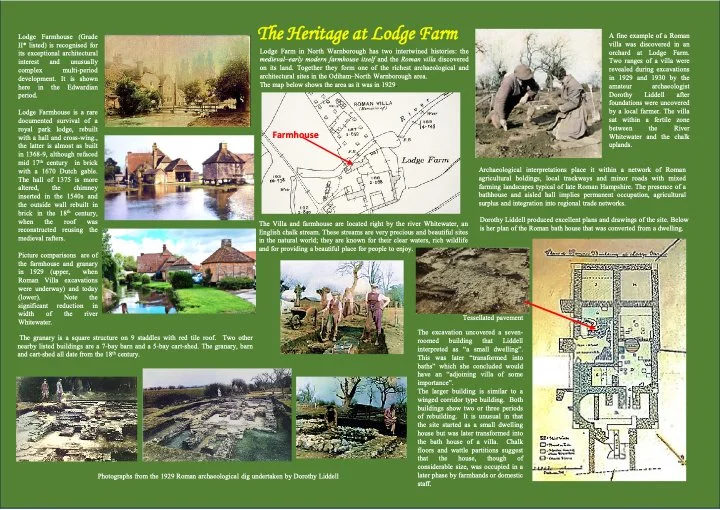
The current farmhouse on the site was originally a Royal Park Lodge linked to the nearby Royal Deer Park and Odiham Castle.
It dates from around 1368-9, with the hall dating from 1375. Since then the buildings have been altered in the 1600’s and again in the 18th Century.
Together, the Neolithic remains, Roman Villa and medieval buildings represent an precious area with a rich heritage directly threatened by this development.
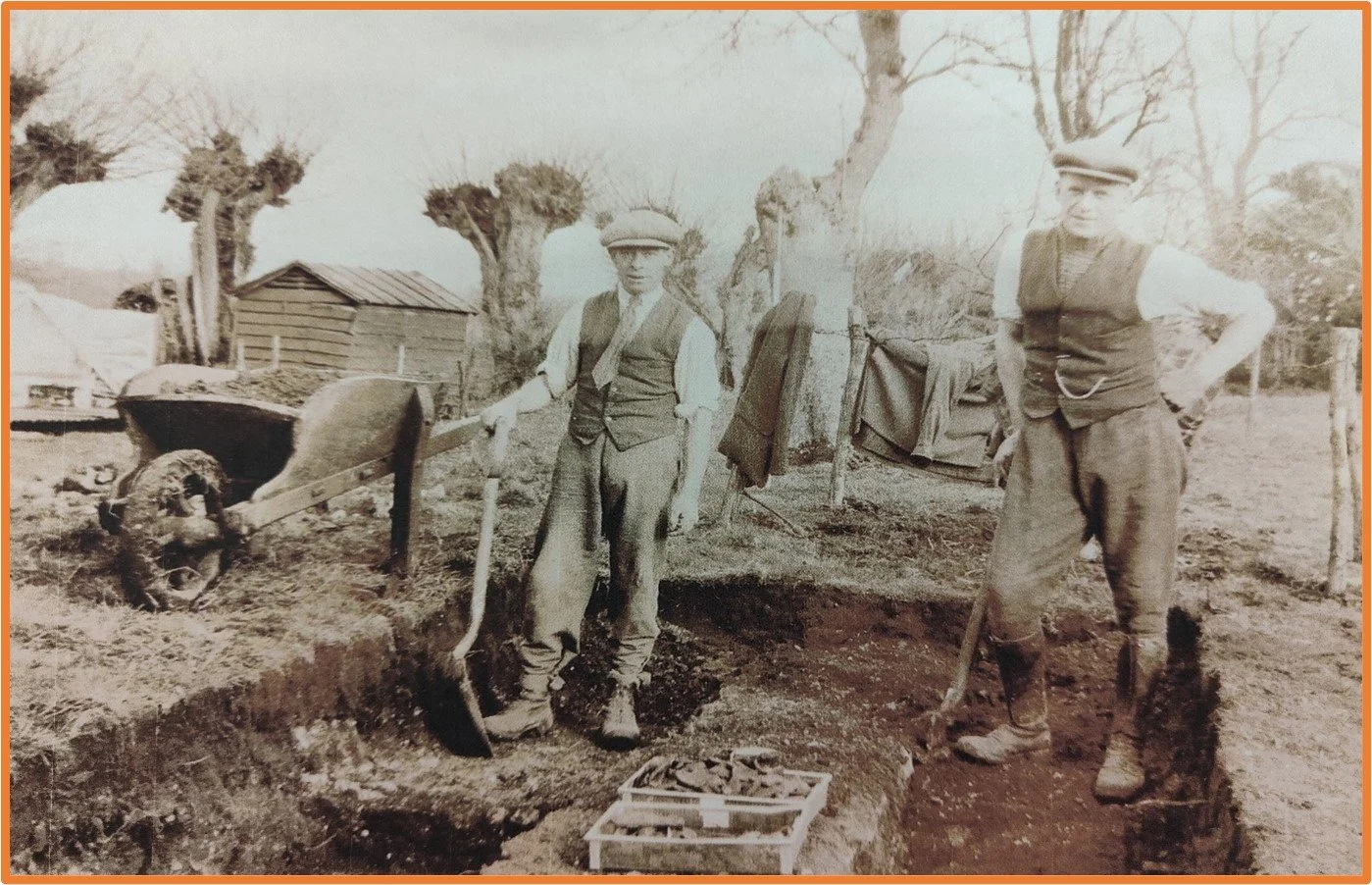
This is a picture from 1929 of the dig that originally discovered a large Roman Bathhouse indicating a substantial villa close by.
The River Whitewater is one of only 200 precious Chalk Streams left in the world and is directly threatened by this proposed development. Here showing how it regularly bursts its banks to flood nearby fields.
This article explains the history of Lodge Farm and appeared in the November 2026 issue of Hook Focus