
Stop the Lodge Farm warehouses
Obsidian have finally submitted their application, and we have been through it. Little has changed since the developer's pre-application talks with Hart Council: There are four warehouses instead of five, covering the of farm land destroying it forever.
So, it’s really important that those of us that care for Hart act now by formally raising your objections to the proposed development with Hart Council. Every objection matters as the Hart planning team will take local opinion into account when making their final decision.
What we could lose…
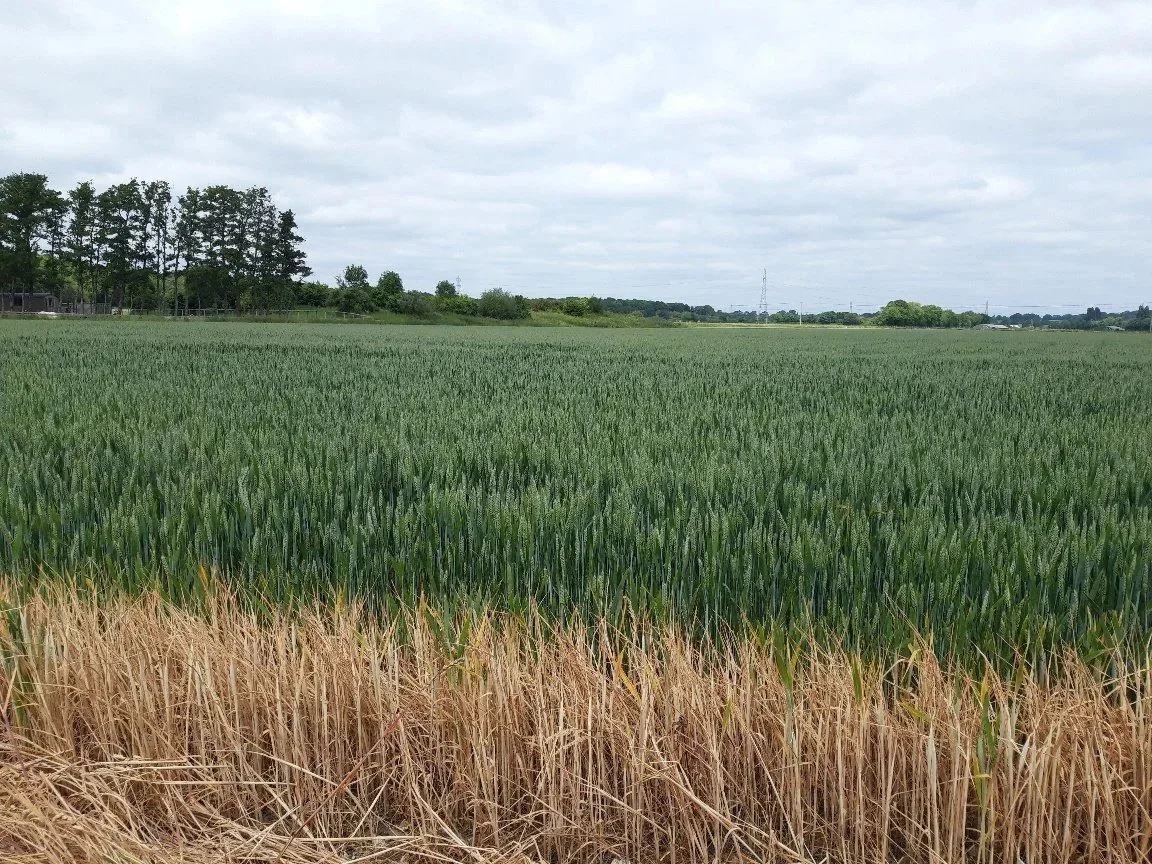
The proposed site is currently prime agricultural land bordering on a rare chalk stream and Roman remains
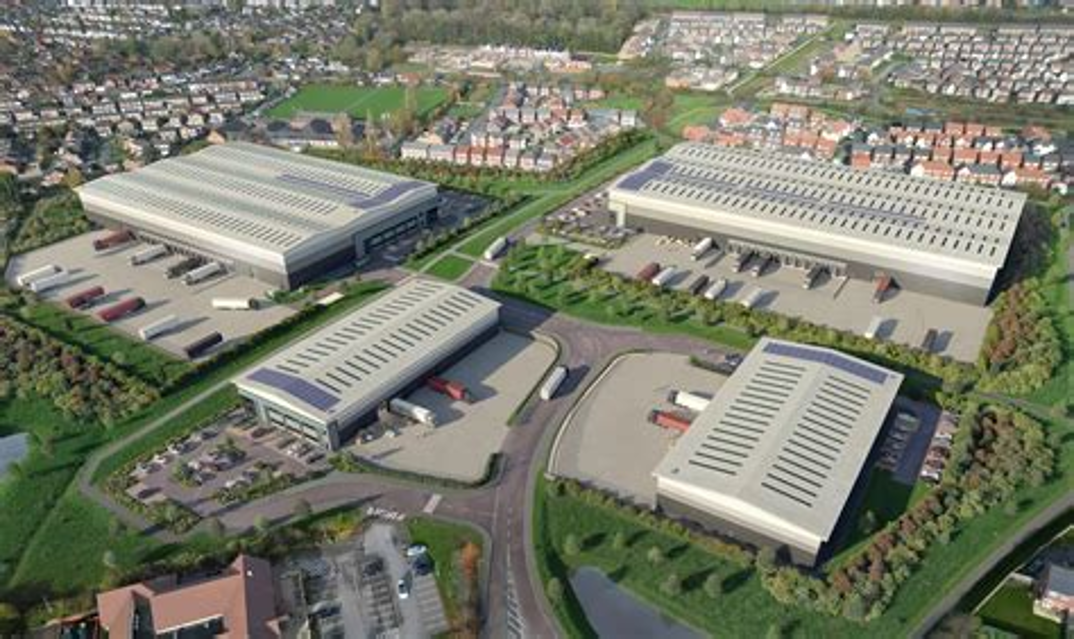
The developer plans to concrete over the entire site erecting four huge warehouses with HGV movements 24/7
NOW is the time to act!
How to Object
There are 3 ways to object:
1. The most efficient way to object is online here:
You may need to login/register, but this only takes a couple of minutes.
2. By EMAIL to: planningadmin@hart.gov.uk
3. By POST to : Hart Planning Department, Hart District Council, Harlington Way, Fleet GU51 4AE
Please remember - when objecting by post and email you will need to include:
Your name and address,
The application number (Application 26/01844/OUT)
Your objections
Who Can Object
Every person in a house can submit one comment, and each comment can contain several objections.
Anyone you know they don't have to live in Hart. So please ask all your family members and friends, plus anyone else you can persuade, to submit an objection.
In order to ensure everyone's objections count please:
Don't copy and paste. Objections that look identical are often given less weight.
Don't object on personal grounds, such as the impact on your view or your house price. Planners have to ignore these.
Be clear. Start by saying you are objecting to application 26/01844/OUT. Finish with: "For these reasons, the application should be refused." or something similar.
When To Object
NOW! The closing date for comments is Friday 4th December 2026
What Your Objection Should Contain
Objections can be:
Simple - a 1 or 2 sentence objection on one issue
Combined - linking multiple simple objections together to form a wider set of objections
Detailed objections - including references to breaches in planning policy etc.
There is no right or wrong approach. The number of objections submitted is as important as the amount of detail included in the objection. How much time you have available, topics you are particularly concerned about or if you simply want to make the strongest technical objection possible will decide which approach works best for you.
Below are some examples of each option to help you prepare the most appropriate response for you. If you are still unsure, it would be worth taking a look at some of the comments already registered on the portal. There are many good examples of each type of objection BUT, as mentioned above, please do not just 'cut and paste' one you like as it is likely to be discounted.
-
Development of this site will lead to the loss of 80acres (3.5million sqft) of productive farmland.
The location is next to Bartley Heath nature reserve and the Basingstoke canal conservation area.
The warehouses would dominate the adjacent housing estate and surrounding area and yet the application makes no reference to these properties.
The local road infrastructure is designed for limited traffic.
No north/south route from the site, except along narrow and sometimes pathless roads putting pedestrians and drivers at risk.
Local roads do not have the capacity to cope with the thousands of extra vehicles, including a lot of HGVs, that such a development would generate.
The site is adjacent to River Whitewater – a rare chalk stream that will be severely damaged by run off from the site.
Tall unsightly warehouses do not fit Hart's rural landscape. It would take decades for plant screening to have any impact, without any guarantee of success.
Diminished views from the Basingstoke canal for the many visitors to the area.
Hart residents will be impacted by noise, light, and air pollution 24 hours per day.
Local traffic will be hemmed in by warehouse traffic.
Public footpaths will be blocked and pedestrians put at risk.
The location is partly on a flood plain with known local drainage problems and flooding in the area.
Increase in noise, light, and diesel emissions from 1,000s of additional vehicles, a high number being HGVs, will lead to a significant increase in pollution across the district.
Lodge Farm is part of a rare and diverse eco-system, including the Whitewater chalk stream, that will be severely damaged by such a development.
Local wildlife that currently moves freely across the countryside will be isolated in pockets around development and cut off from their natural habitat.
The application fails to show that there is any real need B2/B8 warehouses in this location. There is plenty of existing and approved warehouse space within 15-20miles of this location to meet local and regional needs.
Unproven benefit to local economy - the is no evidence to justify the increase in jobs the developer says could be created or evidence to backup the £125m contribution to the local economy.
Job vacancies created are likely to be filled from out of the area.
Protection of heritage assets - the warehouses will be built on historic landscape. King John’s deer park and the remains of the Roman villa nearby will almost certainly be disturbed.
-
The following objection, already submitted, is a great example of how you might combine some of the above to create a more powerful objection
Comment submitted date: Tue 03 Nov 2026
I strongly object to this application.
A large commercial warehouse or industrial development at this location represents an inappropriate and excessive use of open farmland. It would significantly alter the landscape and fail to respect the rural setting and character of the surrounding area.
The scale and nature of the proposed development would introduce additional noise, vehicle movements, loading activities and artificial lighting. This would cause considerable disturbance and be entirely incompatible with the peaceful rural character of the area.
Local roads are unsuitable for a significant increase in heavy goods vehicles. This would create serious safety concerns for pedestrians, cyclists and horse riders, particularly along the routes between Odiham and Hook, where roads are often narrow and lack adequate pedestrian and cycling facilities.
This development is inappropriate for its rural location and would place an unacceptable burden on local roads, compromise the safety of vulnerable road users, disturb local residents and damage the surrounding countryside and environment.
Given the availability of existing commercial and warehouse facilities in the Basingstoke area, I question the need to sacrifice further open farmland for this development.
I strongly object to this application and ask the planning authority to refuse planning permission. -
Wrong place. Lodge Farm is open farmland and countryside. It is outside any settlement, not previously developed land and not allocated for development on the Hart Local Plan; building on the site would be contrary to many national policies currently in force, including National Planning Policy Framework (NPPF) S5 (development outside settlements), E2 (Business land and premises) and E3 (freight and logistics). It conflicts with Hart Local Plan Policy SS1 (spatial strategy) and the development criteria set out in Policy NBE1 (Development in the Countryside) - which applies to any development on farmland. 'The justification for building in the countryside must be very strong indeed', according to paragraph 170 of the Hart Local Plan, including justifying why the location is unique and the need for the development in the first place. The application has not demonstrated that the claimed unmet need requires development of this site, particularly given existing and committed supply elsewhere.
Traffic. Junction 5 is already under pressure, the application does not show that local roads and junctions can cope with additional traffic including HGV’s. The new National Planning Policy Framework (policy TR6) says development should be refused if it would have a severe impact on the transport network or an unacceptable impact on highway safety. It also conflicts with Hart Policy INF3 (Transport) because of the unsupportable impact of the increased levels of traffic on the local and strategic road network, its impact on the safety of the local population, local Rights of Way and its impact on Hart’s carbon reduction targets.
Not needed. There is existing, approved and planned warehouse space in Hook, Basingstoke, Dummer and across Hampshire. The developer's own needs report fails to show a need for this site. Independent studies commissioned by Hart for its new Local Plan show no requirement for logistics space on this scale. The application also takes no account of the approved Dummer Distribution Centre at Junction 7, which is very similar to the Lodge Farm proposals.
Conflicts with Hart Planning Policies. The proposal also raises substantial conflicts with Hart Policies ED1 and ED3, including whether employment development of this scale is appropriate in this countryside location and whether its impacts on transport, landscape, environment and surrounding communities are acceptable.ED1 (New Employment) defines the criteria for new employment developments and, from the available information, this application fails on items a), b), c) and the first clause in item d) of the policy; ED3 (the rural economy) by failing to provide sufficient evidence that the proposal is of a use and scale that is appropriate to the site and location.
Wildlife, heritage and flooding. This proposal would ruin the River Whitewater and the wildlife it supports. The site is affected by important environmental constraints, including nearby designated nature-conservation sites, the setting of heritage assets and areas that are annually affected by flooding. The application fails to demonstrate that the development avoids or satisfactorily mitigates harm to biodiversity, heritage significance and flood risk in accordance with the NPPF N, HE and F policies.
Warehouses: A bad neighbour. The site sits next to about 40 homes in North Warnborough. To the west, 10 homes on Poland Lane and others in Potbridge would also be affected. The application would have a severely detrimental impact on both the surrounding neighbours and the villages and communities across Hart. This is a rural community, not an industrial estate. The applicant proposes mitigation, but that doesn't make the effects disappear. Residents will experience the combined severe level impact of 24 hour HGV traffic, industrial noise, lighting and the visual presence of enormous warehouse buildings, for ever. All roads and villages in surrounding areas would be impacted by HGVs waiting for their allocated slot – day and night.
Right to a quiet life. The development will severely impact the residential amenity for all those living in Hart. Residents do not want the peace and tranquillity of their homes disturbed by the noise, exhaust gases and the light pollution from 24hour traffic movements, a significant number being HGVs, across the district. Residents will have to endure the mental stress of these disturbances all day and night and their homes will not be the peaceful sanctuary that we all have the right to expect. National policy (NPPF policy P3) says development must not expose people to significant adverse noise, but the law requires HGVs to test their air horns and air brakes on site before going out onto the road, at all times of day and night. The Hart Local Plan says such development "will not be supported". The developer's own report predicts:
lorry night-time activity peaking between 4am and 5am;
night-time traffic noise at some homes will be above the level the report itself calls unacceptable.
ONCE THIS COUNTRYSIDE IS GONE, IT'S GONE
Lodge Farm is presently predominantly open farmland. Granting permission for up to 100,000 m² of B2/B8 development would fundamentally and permanently change its character.
Replacement planting, landscaping and screening cannot change the basic fact that open countryside would become a major industrial/logistics development.